Kenya now has eight UNESCO World Heritage Sites, and five of them are cultural: Lamu Old Town, the Sacred Mijikenda Kaya Forests, Fort Jesus, Thimlich Ohinga and, since July 2024, the Historic Town and Archaeological Site of Gedi. Add the Rift Valley's prehistoric sites, the Lake Turkana fossil beds and a Nairobi house museum, and you have a heritage itinerary that fits easily around a safari.
This guide lists ten places worth your time in 2026, grouped so you can see which ones combine well. Most are managed by the National Museums of Kenya (NMK). Ticket prices and opening hours change, so confirm them with NMK or the site before you travel rather than relying on figures in older articles.
The ten sites at a glance
| Site | Region | What it is (era) | UNESCO status | Time to allow |
|---|---|---|---|---|
| Lamu Old Town | Lamu Island, north coast | Living Swahili town, 700+ years of settlement | Inscribed 2001 | 2–3 nights |
| Fort Jesus | Mombasa Island | Portuguese fortress, built 1593–1596 | Inscribed 2011 | 2–3 hours |
| Gedi | Near Watamu, Kilifi County | Swahili town, roughly 10th–17th centuries | Inscribed 2024 | 2–3 hours |
| Jumba la Mtwana | Mtwapa, north of Mombasa | Swahili settlement, 14th–early 15th century | Not inscribed | 1–2 hours |
| Sacred Mijikenda Kaya Forest | Kwale, Kilifi, Mombasa | Fortified forest villages, sacred to the Mijikenda | Inscribed 2008 (11 forests) | Half day |
| Thimlich Ohinga | Migori County, west Kenya | Dry-stone enclosures, probably 16th century | Inscribed 2018 | Half day plus travel |
| Hyrax Hill | Nakuru, Rift Valley | Neolithic and Iron Age settlement site | Not inscribed | 1–2 hours |
| Kariandusi | Near Lake Elmenteita | Acheulean stone-tool site (Lower Palaeolithic) | Not inscribed | 1–2 hours |
| Karen Blixen Museum | Karen, Nairobi | 1912 farmhouse of the Out of Africa author | Not inscribed | 1–2 hours |
| Koobi Fora | Sibiloi NP, Lake Turkana | Hominid fossil beds | Part of Lake Turkana NPs (1997, natural) | Multi-day expedition |
"Time to allow" is our editorial estimate for the visit itself, not including transport.
The 10 places
1. Lamu Old Town
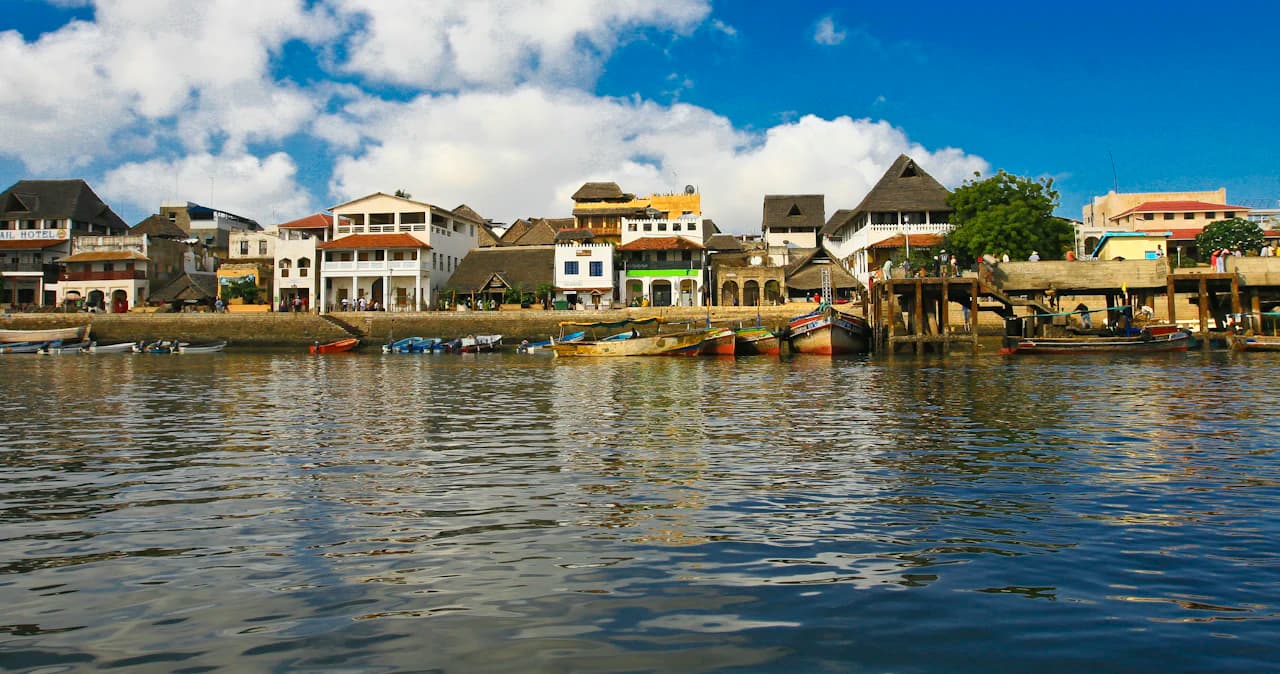
UNESCO describes Lamu as the oldest and best-preserved Swahili settlement in East Africa, continuously inhabited for more than 700 years. Its coral-stone and mangrove-timber houses, carved doors, narrow lanes and waterfront show centuries of African, Arab, Indian and European influence. Cars are largely absent from the old town, so you walk, or travel by dhow and boat between Lamu, Shela and Manda.
Give it at least two nights; the pleasure of Lamu is the pace. Festivals such as the Lamu Cultural Festival are held periodically, but dates vary, so check announcements before you plan around one.
Travel advisory note: some governments advise against travel to parts of Lamu County on the mainland while treating Lamu and Manda islands differently. The UK government's current advice, for example, distinguishes the islands from the rest of the county and recommends arriving by air via Manda. Check your own government's latest advice and your insurance terms before booking.
2. Fort Jesus, Mombasa
Built by the Portuguese between 1593 and 1596 to plans by the Italian engineer Giovanni Battista Cairati, Fort Jesus guarded Mombasa's harbour and changed hands repeatedly between Portuguese, Omani and later British control. UNESCO inscribed it in 2011 as an outstanding example of 16th-century Portuguese military architecture. Inside are a museum of coastal archaeology, ramparts with views over the old harbour, and the wall inscriptions and graffiti left by successive garrisons.
Pair it with a walk through Mombasa Old Town, which starts right outside the gate.
3. Gedi (Gede) Ruins
Set in coastal forest just outside Watamu, Gedi is the shell of a substantial Swahili town with a great mosque, a palace, houses, tombs and wells built of coral stone. UNESCO added it to the World Heritage List in July 2024 as one of the most important and densely populated Swahili cities on the East African coast. Older guides that describe Gedi as "not UNESCO-listed" are out of date.
A guide makes a real difference here: much of the town's layout only makes sense once someone shows you how the walls, wells and lanes fit together.
4. Jumba la Mtwana
On the shore near Mtwapa Creek, about half an hour north of Mombasa, Jumba la Mtwana preserves mosques, a tomb and house ruins from a 14th-century Swahili town that appears to have been abandoned in the early 15th century. The name is usually translated as "large house of the slave," though there are no written records to confirm its origin. The mosque by the sea is the most memorable structure, and Kenyan press reports have flagged coastal erosion as a growing threat to it, so this is a site worth seeing sooner rather than later.
5. Sacred Mijikenda Kaya Forests
The UNESCO listing covers 11 forest sites spread over about 200 km of the coast in Kilifi, Kwale and Mombasa counties. Each kaya was once a fortified village of one of the Mijikenda peoples; today the forests are revered as the dwelling places of ancestors and are cared for by councils of elders. NMK counts dozens more kaya forests beyond the inscribed group.
Most kayas are not open to casual visitors. Kaya Kinondo, near Diani, offers community-run guided walks: expect a short briefing, a dress code, quiet behaviour and areas (such as the main shrine) reserved for elders. Confirm that the forest is open and a guide is available before you go.
6. Thimlich Ohinga
About 46 km north-west of Migori town, near Lake Victoria, Thimlich Ohinga is a group of dry-stone enclosures built without mortar, probably in the 16th century. UNESCO, which inscribed it in 2018, calls it the largest and best-preserved example of this kind of enclosure in the region. The walls once protected homesteads and livestock and reflect a building tradition that lasted into the mid-20th century.
It is far from the usual safari circuit, so it suits travellers already heading to western Kenya or combining a trip with Lake Victoria.
7. Hyrax Hill Prehistoric Site
On the edge of Nakuru, Hyrax Hill was excavated by Mary Leakey in the late 1930s and shows evidence of Pastoral Neolithic and Iron Age occupation, including burials and stone enclosures. A small NMK museum displays obsidian tools and finds from the site, and the hilltop looks out over the Nakuru basin. It fits neatly into a day at Lake Nakuru National Park.
8. Kariandusi Prehistoric Site
Near Lake Elmenteita, Kariandusi was identified by Louis Leakey in 1928 and is known for its Acheulean hand axes, many of them shaped from local obsidian. Archaeologists interpret it as a tool-making site rather than a permanent settlement; published age estimates vary widely, so treat any single figure with caution. With Hyrax Hill, it makes a compact Rift Valley prehistory stop.
9. Karen Blixen Museum, Nairobi
This bungalow was built in 1912 by the Swedish engineer Åke Sjögren and bought by Karen Blixen and her husband in 1917 as the farmhouse for their coffee estate. It opened as an NMK museum in 1986, shortly after the film Out of Africa was shot. Rooms and gardens are presented as a window on settler-era Nairobi, which is worth viewing with that colonial context in mind. Combine it with other Karen and Lang'ata stops on your first or last day in Nairobi.
10. Koobi Fora, Lake Turkana
On the eastern shore of Lake Turkana inside Sibiloi National Park, the Koobi Fora deposits have yielded hundreds of hominid and animal fossils and remain an active research area. Sibiloi is part of the Lake Turkana National Parks World Heritage Site, inscribed in 1997 for its natural values and on UNESCO's List of World Heritage in Danger since 2018. Access is by charter flight or a long, rough overland journey; visits to the research base are arranged in advance with NMK. Original hominid specimens are held in Nairobi, so a visit to the Nairobi National Museum is a good companion.
Also worth a look: the Nairobi Railway Museum, on the story of the Uganda Railway, and the Mnarani ruins above Kilifi Creek.
Suggested routes and travel times
Road times below are rough guides for a private car in normal conditions; traffic in Nairobi and Mombasa can easily add an hour.
| Route | Sites | Approximate travel | Suggested length |
|---|---|---|---|
| Mombasa heritage day | Fort Jesus, Mombasa Old Town, Jumba la Mtwana | Mtwapa about 30–60 minutes north of central Mombasa | 1 day |
| North coast Swahili towns | Jumba la Mtwana, Mnarani (Kilifi), Gedi (Watamu) | Mombasa to Watamu roughly 2–3 hours by road | 1–2 days |
| South coast culture | Kaya Kinondo, Diani | Confirm the current road route and transfer time to Diani | Half day |
| Lamu extension | Lamu Old Town, Shela, Manda | Domestic flight to Manda, then boat to Lamu | 2–3 nights |
| Rift Valley prehistory | Kariandusi, Hyrax Hill, Lake Nakuru NP | Nakuru roughly 3 hours from Nairobi by road | 1–2 days |
| Nairobi heritage day | Nairobi National Museum, Karen Blixen Museum | Karen about 30–60 minutes from the city centre | 1 day |
| Western Kenya | Thimlich Ohinga, Lake Victoria | Fly to Kisumu, then several hours by road | 2–3 days |
Entry before you travel
Most visitors need a Kenya Electronic Travel Authorisation (eTA) approved before departure, although some passports are exempt. Start by checking your nationality, then review the Kenya eTA requirements. A heritage tour usually involves several hotels, so our safari accommodation and itinerary guide explains how to present a multi-stop trip.
For entry permission, use the official Kenya eTA portal and check current exemptions for your passport. Tourism bookings and entry permission are separate.
Sources and review
Checked 4 November 2026. Time-to-allow estimates and route suggestions are editorial guidance; confirm prices, opening hours and access with the National Museums of Kenya or the site before visiting.
- UNESCO: Kenya World Heritage properties
- National Museums of Kenya: The Historic Town and Archaeological Site of Gedi
- UNESCO: World Heritage Committee decision on Fort Jesus (2011)
- UNESCO: Lamu Old Town nomination file
- UNESCO: Thimlich Ohinga inscription news
- National Museums of Kenya: The Sacred Mijikenda Kaya Forests
- National Museums of Kenya: Karen Blixen Museum
- National Museums of Kenya: Sibiloi and Koobi Fora
- Lonely Planet: Jumba la Mtwana
- UK government: Kenya travel advice
- Kenya eTA: official application portal